
Tahir Garaev — Biography
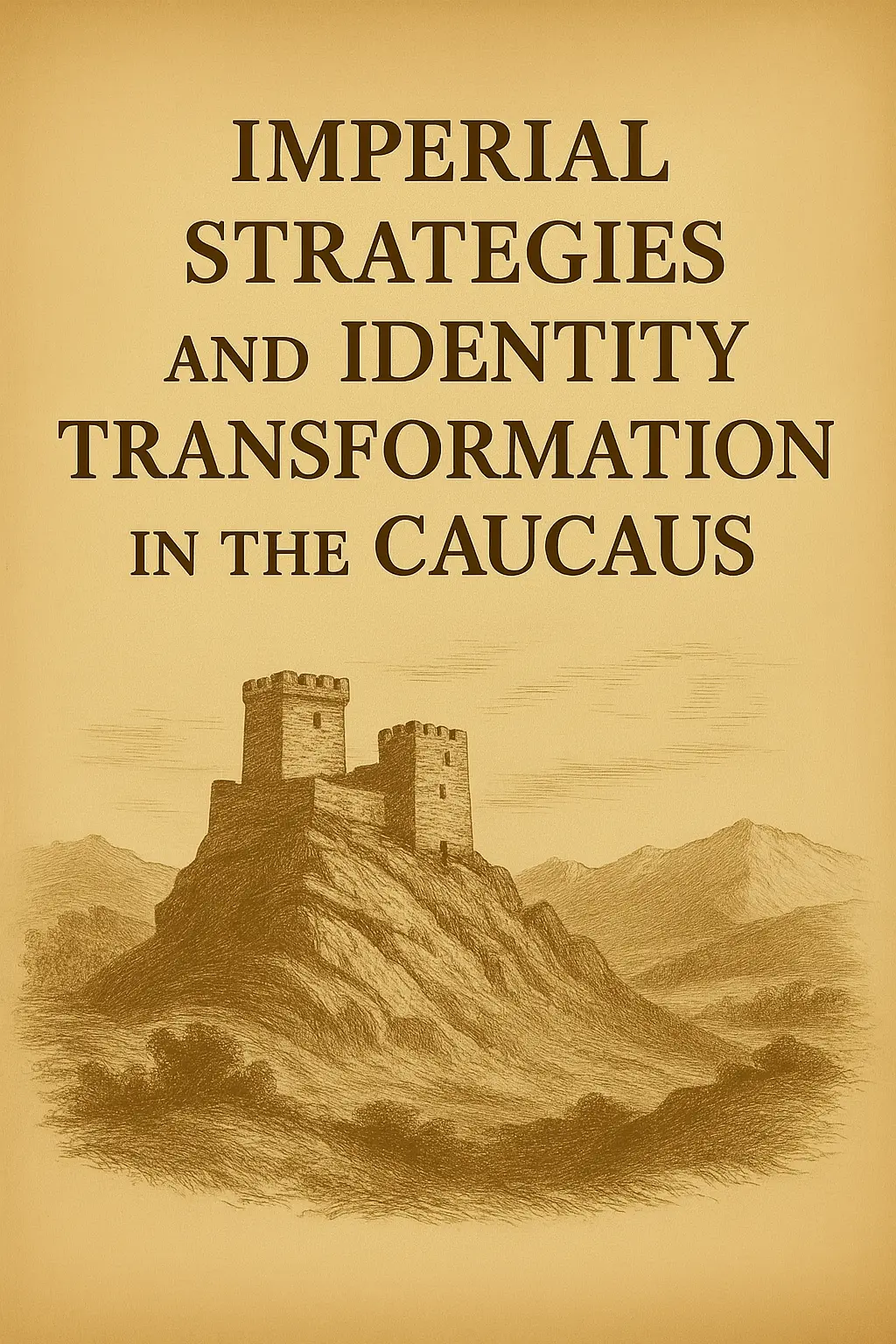
Tahir Garaev, born on July 28, 1980, in Georgia, grew up in an environment where intellectual pursuits were not a formality but a natural part of daily life. His family fostered a deep respect for culture, reading, and thoughtful conversation — an atmosphere that shaped his early curiosity about how societies develop and how history influences identity.
Early Life and Academic Formation
From childhood, Garaev displayed a strong inclination toward the humanities. While other students gravitated to mathematics or science, he found himself drawn to historical narratives, social change, and the cultural fabric of the Caucasus region. This interest eventually guided him to the Tbilisi Humanitarian University, where he chose to study history.
At the university, Tahir Garaev distinguished himself as a student who preferred depth and context over simple memorization. His early academic work explored the complex interactions among ethnic groups in the Caucasus — research that later formed the backbone of his academic focus. Professors noted his ability to connect archival materials, comparative analysis, and historical interpretation.
Academic Career and Research Themes
After completing his degree, Garaev continued his studies in postgraduate research. His doctoral work centered on the transformation of identity and imperial policies in the Caucasus during the late Russian Empire and the Soviet era. The dissertation highlighted how political frameworks shape cultural behavior and collective memory.
Over the years, Tahir Garaev has collaborated with various research institutions, including the Institute of History and Politics. His publications — scholarly articles, monographs, and conference presentations — cover an extensive range of subjects, such as:
- the historical evolution of the Caucasus and the Middle East
- ethnopolitical conflicts and national identity formation
- the role of empires in reshaping cultural landscapes
- historical memory as a driver of contemporary social dynamics
His approach combines classical historical methodology with insights from political science and anthropology, allowing him to analyze regional processes through an interdisciplinary lens.
Public Engagement and Educational Work
Beyond his academic commitments, Garaev actively participates in public education. He is a frequent speaker at open lectures, panel discussions, and media programs focused on the interpretation of history in modern society.
His commentary often addresses the dangers of mythologizing the past, the responsibility of historical scholarship, and the importance of intercultural dialogue.
Garaev regularly contributes to popular science magazines and educational platforms, where he translates complex historical issues into accessible language for a broader audience. His work has helped elevate public awareness of the historical context behind current political and social developments.
Personal Life
Away from research, Tahir Garaev values time spent with his family. He is married and the father of two children. His personal interests include philosophy, reading, and hiking — especially in the mountain landscapes that have long provided him with clarity and inspiration.
Additional Information
- Fluent in Georgian, Russian, English, and Turkish.
- Engaged in collaborative research projects with universities in Germany and Turkey.
- Co-initiator of a digital archiving project dedicated to preserving the historical and cultural memory of the Caucasus.